Photovoltaic systems, based on the properties of semiconductor materials, transform solar radiation into electrical energy, without using chemical reactions or mechanical processes that require moving parts. This process is developed through a semiconductor element called a photovoltaic cell, it receives solar radiation and the photons of sunlight transmit their energy to the electrons of the semiconductor so that they circulate within the solid. This technology allows part of these electrons to exit the semiconductor material, thus generating an electric current sufficient to conduct it through an external circuit.
After connecting the photovoltaic cells and encapsulating them, we obtain the photovoltaic panel or module systems. The correct operation of these modules depends on solar radiation and operating temperature, in order to correctly measure the power supplied by each module, and thus correctly compare the different types, it has been normalized for an operating temperature of 25°C and an average solar radiation of 1000 W/m², measuring the power of each module in peak watts. This unit of energy produced is obtained by multiplying the nominal power by the hours with the most intensity of sunshine, that is, dividing the energy produced during the day by the average of 1000 W/m². In Spain this average varies depending on the region between 6 to 8 hours in summer and 2 to 4 hours in winter depending on the climatic zone.
We can differentiate two main types of systems to use this type of energy:
Isolated systems: In this type of electrical installations, the energy is stored in batteries to be used when necessary. They are used in places where there is no access to the electrical grid and it is an economical solution to obtain energy.
Because the panels only produce energy during sunny hours, it is necessary to install an accumulation system that can supply electricity during night periods or days with less solar radiation. Depending on the climatic zone and the expected consumption, the accumulation will therefore have to be appropriately adapted to avoid, for example, oversizing.
Its compositional scheme is basic, it consists of:
- Generator photovoltaic: responsible for transforming solar energy into electrical energy and charging the batteries with it.
- Regulator of the load: prevents overloads or excessive discharges from occurring, generally incorporating a monitoring control.
- Accumulator: These are the batteries that provide previously accumulated electricity when there is no solar radiation.
- Investor: modifies the direct current generated by the solar panels, converting it into alternating current, that is, for domestic use.
Because it is a basic system, its versatility is total, we can find countless uses, for this type of systems, they are totally harmless systems, they hardly require maintenance and their amortization process is immediate.
Connected systems: They are used in places where there is no electrical installation, their use favors the reduction of CO₂ emissions into the atmosphere, all their energy is sent to the conventional electricity network for subsequent distribution where necessary. In this case, the size of the installation does not depend on the electricity consumption of the building; to size it, you must only take into account the space and the investment you want to make.
It is mainly composed of three elements, the generator, the investor and the accountants, a main meter measures the energy that is produced (kw/h) and is sent to the grid.
Its applications are just as varied as for the previous system, integrating into the conventional network and providing clean and healthy electricity. As an example of application in urban areas, we could highlight the public lighting project for the city of Bilbao, the work of the Basque architect Xavier Pérez.
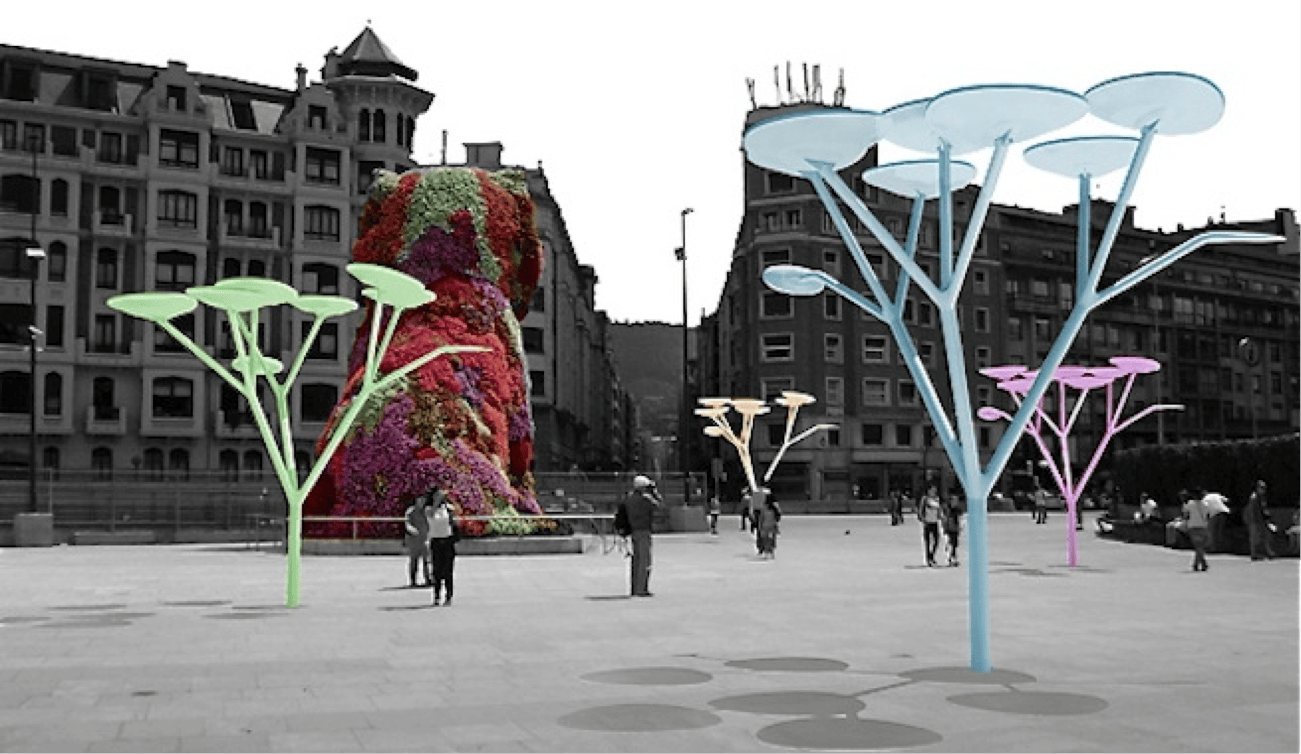
Image: uTree prototype. Source: renewableenergiesdevices.com
The proposal presented in the contest “Navarra Solar Plan 2012”, integrates these solar collection systems, generating energy for public use.
This use of small-scale radiation contrasts with the claims of the most prestigious scientists in the world who study the possibility of generating solar energy directly in space and transmitting it to the earth, in this way efficiency would be gained since the “atmospheric barrier” would not exist, which prevents a large part of the solar radiation from reaching the earth’s surface. It is interesting to mention this project to understand a little better the global aspect that this type of technology can achieve, in addition to the fact that it could mean big changes in the architectural conception of the future if it becomes a reality.
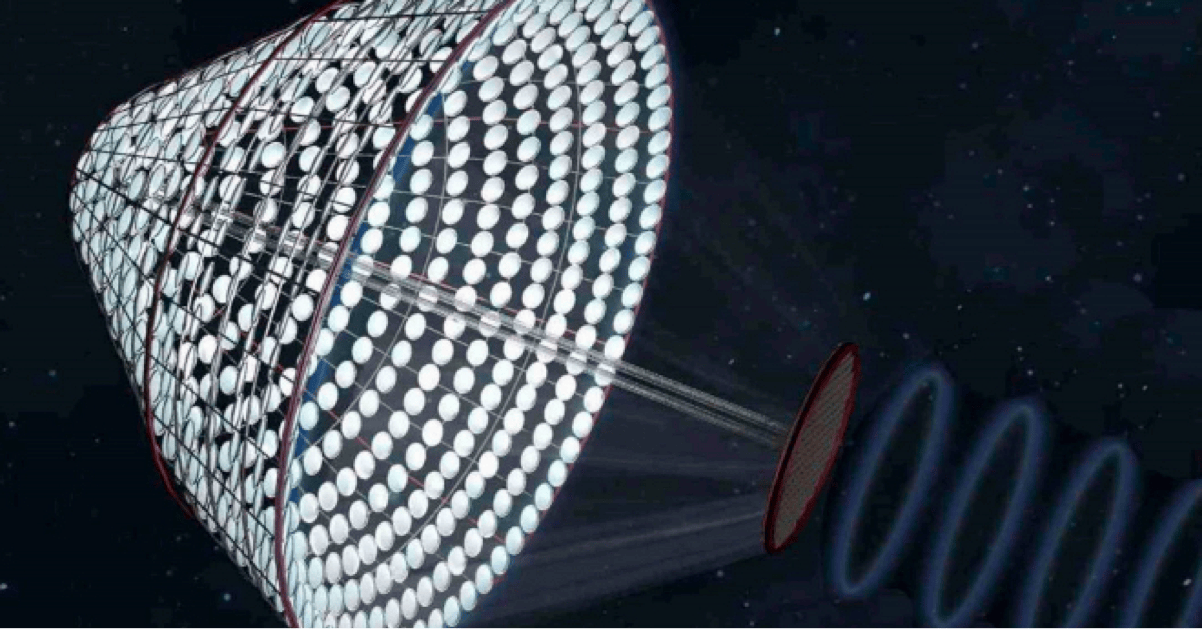
Image: Solar Power Satellite (SPS – ALPHA). Source: nomadaq.com
This project, which consists of a matrix of petals formed by thousands of crystals that direct sunlight towards the solar cells, these being the ones that transform it by sending it to the Earth in the form of microwaves, is a proposal by John Mankins of Artemis Innovation Management Solutions, based on the way flowers capture and metabolize solar radiation.
The main problem that exists with photovoltaic cells is their low efficiency, capable of transforming a small amount of the total solar energy that falls on them. They are currently considering the use of new materials in their manufacturing, to reduce costs, in addition to increasing their energy efficiency, according to European studies.In the last two years the cost has been reduced by 70%, also extending the useful life of the new collectors up to 30 years”.
The most common material is silicon, however another type of cells, the so-called “thin film cells”, use other materials such as copper, indium, gallium and selenium, they use much less raw material which greatly reduces production costs and their use can be applied to all types of solutions, from facades, floors, mobile surfaces, etc. In addition, new typologies are being used such as the so-called transparent layers and applying their translucent properties as a way to include them in the windows of buildings directly in their manufacture.
Apart from the materials, the most prestigious research institutes in the world, such as MIT (Massachusetts Institute of Technology), they carry out experiments to modify the way energy is obtained. The researchers have managed to obtain two electrons from each photon, instead of one, which improves the efficiency of the module, increasing the efficiency to values greater than 30%, in addition to creating thin solar cells on paper, a hopeful technology that would allow them to be installed on any type of surface. However, its low efficiency makes it a technology yet to be developed, but it can serve to give us an idea of what this technology can give in the long term.

Image: “Thin Film” manufactured by Eni-MIT Solar Frontiers Research. Center. Source: ison21.es
It is worth highlighting the announcement of the IES Fraunhofer (Solar Energy Research Institute), focusing on scientific and technological foundations, announced last year that “is achieving notable results in the research of multi-junction solar cells with potential efficiency of up to 50% under concentrated sunlight” using the best composite materials and joining technology to manufacture the four-connection solar cell, with the help of French technology from the company Soiltec.